What to Check in a Home’s Electrical System Before Buying
Before buying a home in Costa Rica, check the electrical panel, wiring, grounding, and warning signs that could point to safety risks or costly repairs.
Buying a home involves more than checking the paint, finishes, plumbing, or roof. Electrical problems are often hidden during a quick walkthrough, yet they can later lead to expensive repairs, power interruptions, damaged equipment, or safety concerns.
A pre-purchase electrical assessment provides a clearer picture of the property’s condition and helps buyers plan for repairs or upgrades. It is particularly valuable for older homes, remodeled properties, coastal residences, and houses that have been operated as rentals or Airbnbs.
Why inspect the electrical system before buying?
An electrical system may appear to work normally while still containing loose connections, deteriorated wiring, overloaded circuits, inadequate protection, or improvised modifications. Turning on a few lights and finding power at the receptacles does not prove that the system is safe or capable of meeting the home’s current demands.
A professional assessment can help:
- Identify faults and potential safety concerns.
- Find damaged wiring, connections, or components.
- Determine which repairs may be necessary.
- Establish whether a panel or wiring upgrade is advisable.
- Estimate electrical expenses before closing.
- Reduce the risk of unexpected failures and larger damage.
- Evaluate whether the system can support major appliances and future additions.
A general home inspection is valuable, but it may not include detailed electrical testing or diagnosis. If the property presents warning signs or unanswered questions, a dedicated electrical evaluation is a sensible next step.
1. Electrical panel condition
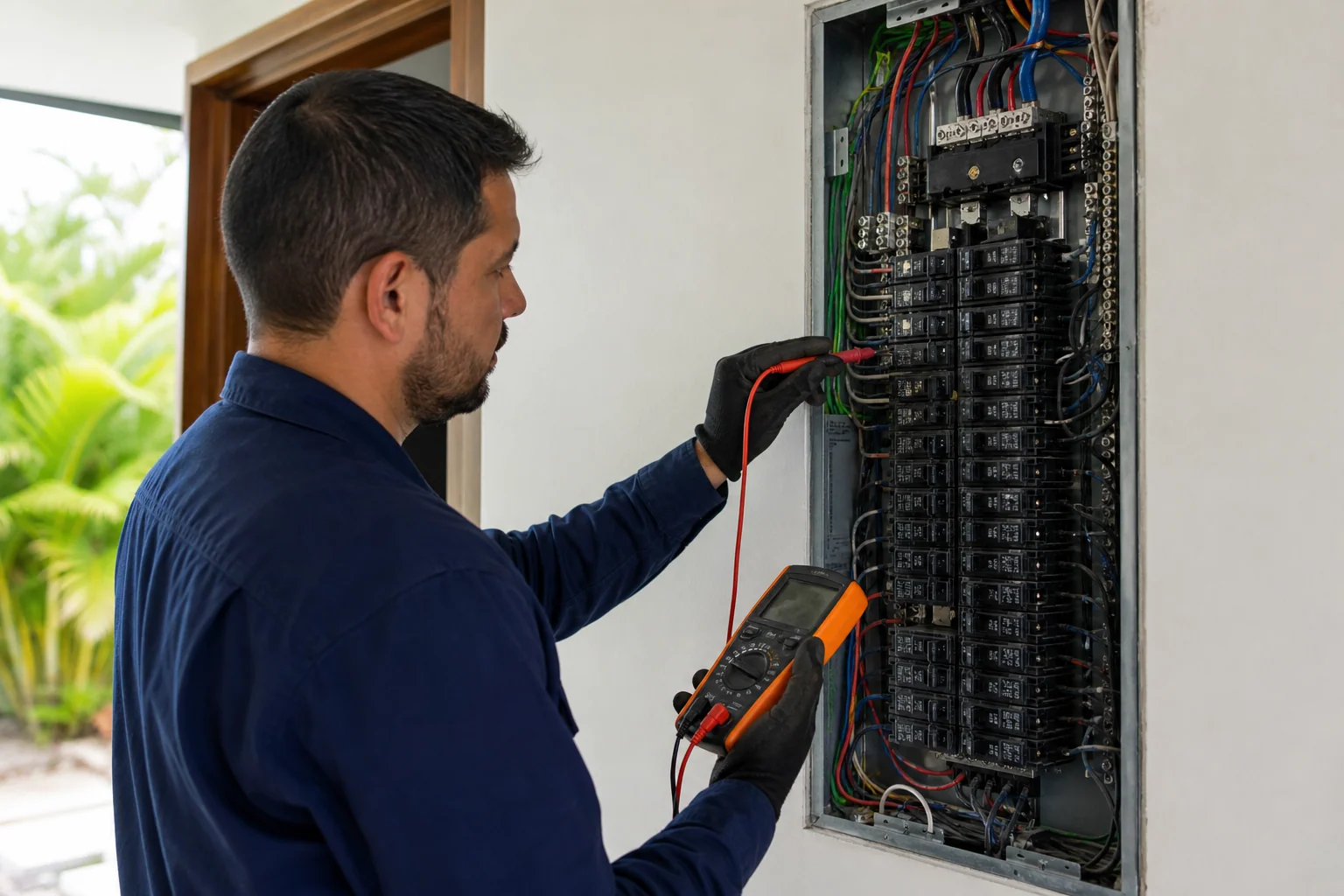
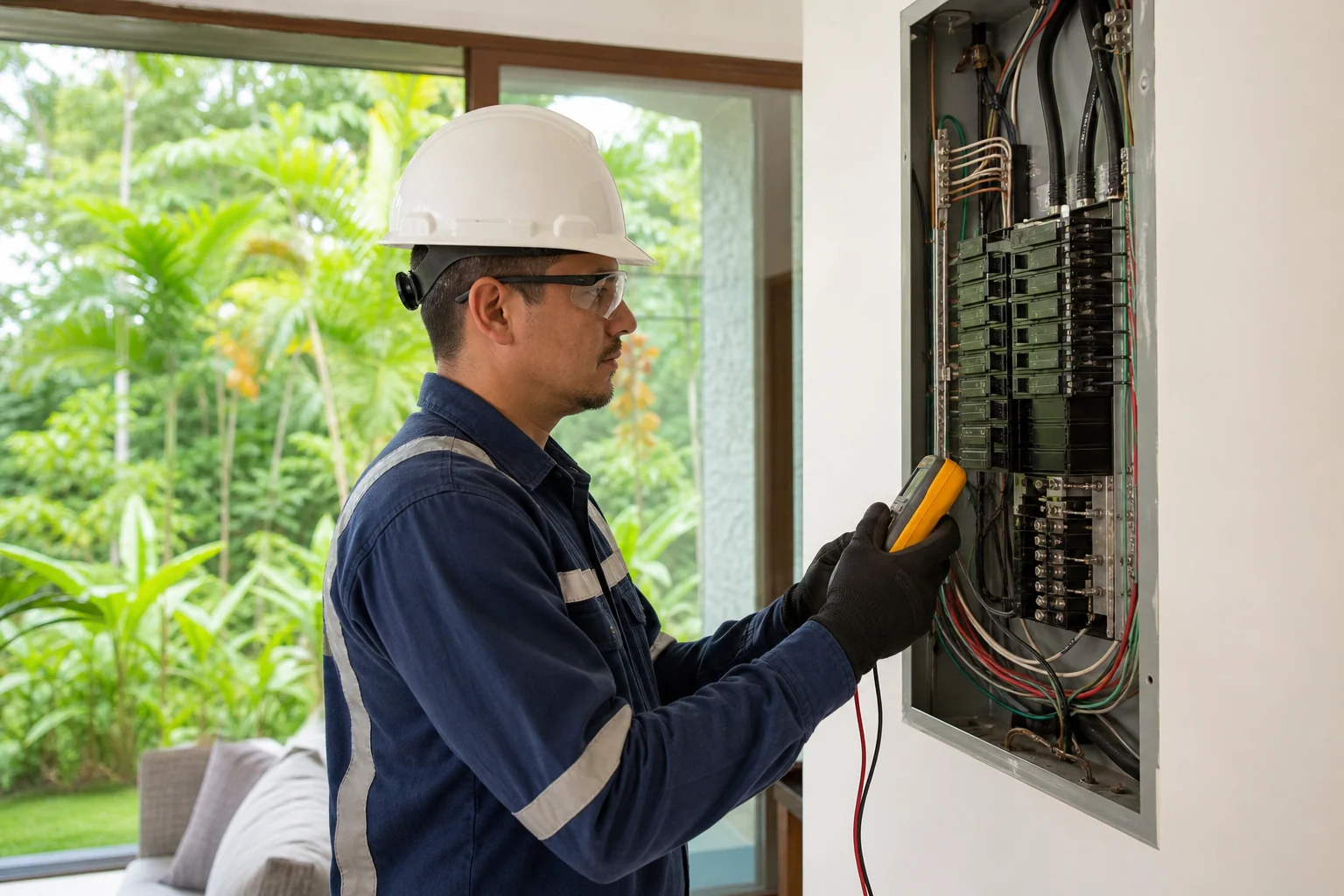
The panel is a key inspection point because it distributes electricity throughout the home. It should be accessible, close properly, and show no obvious signs of moisture, corrosion, overheating, or disorderly modifications.
A professional may evaluate:
- The overall condition of the enclosure.
- The condition and arrangement of the breakers.
- Circuit labeling.
- Missing covers or open spaces.
- Signs of overheating or loose connections.
- Whether breakers, conductors, and connected loads are appropriately matched.
- Available capacity for future electrical needs.
Unlabeled breakers, disorganized wiring, or visibly worn components do not necessarily mean the entire system must be replaced. They do, however, justify a closer assessment.
Do not remove internal panel covers or touch wiring. Parts inside an electrical panel may remain energized and present a severe hazard, even when some breakers are switched off.
2. Wiring age and condition
The age of the home provides context, but it does not establish the age of every circuit. Properties are often expanded or remodeled in stages, leaving a mixture of newer wiring and older sections.
A qualified electrician can look for:
- Dry, cracked, or deteriorated insulation.
- Improper splices.
- Conductors that may not be suitable for the connected load.
- Exposed or unprotected wiring.
- Improvised connections in ceilings, attics, or outdoor areas.
- Damage associated with moisture, pests, or excessive heat.
Pay attention to extension cords used as permanent wiring, overloaded power strips, and cords running through doors or walls. These conditions may indicate that the house lacks enough receptacles or circuits for the way it is currently used.
3. Receptacles, switches, and lighting
During a walkthrough, buyers should limit themselves to visual observations and report anything unusual. They should not remove cover plates or attempt electrical repairs.
Warning signs include:
- Loose, cracked, or stained receptacles.
- Switches that spark, buzz, or feel unusually warm.
- Lights that flicker repeatedly.
- A burnt-plastic smell.
- Darkened or distorted cover plates.
- Receptacles that work intermittently.
- Visible moisture inside outdoor light fixtures.
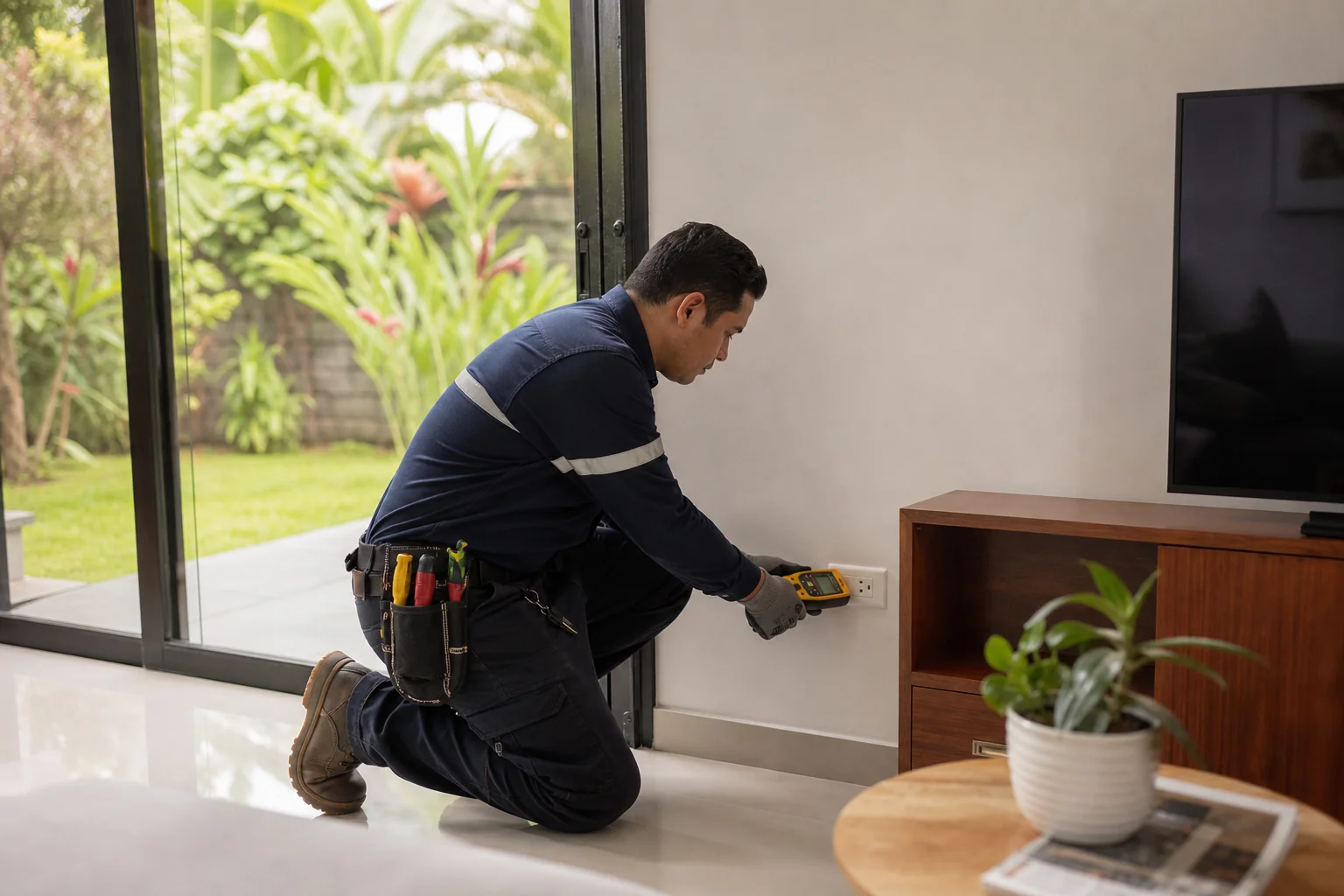
A working receptacle is not proof that it is wired correctly or has an effective grounding path. Those conditions require appropriate testing equipment and a trained professional.
4. Grounding system
Grounding helps reduce risk under certain fault conditions and supports the proper operation of protective devices. Buyers should not assume that grounding is present simply because receptacles have three slots.
An assessment can help determine whether a grounding path is present, whether accessible components show deterioration, and whether previous changes may have compromised the system. This is especially relevant when the home will contain computers, smart-home devices, entertainment systems, appliances, chargers, or other sensitive electronics.
In humid regions and coastal areas, environmental conditions can accelerate corrosion. The actual condition of grounding components must be evaluated at the property rather than judged solely by their exterior appearance.
5. Service capacity and load distribution
A house may have been designed for much lower electrical demand than a modern household requires. Air conditioners, electric ranges, clothes dryers, water heaters, pool equipment, pumps, and vehicle chargers can place substantial demands on a system.
Before buying, try to establish:
- Which major electrical appliances and systems are installed.
- Whether they have suitable circuits.
- Whether the panel has room and capacity for future needs.
- Whether any breakers trip frequently.
- Whether you plan to add air conditioning, water heating, or other large loads.
- Whether a future renovation may require panel or service changes.
A breaker that trips repeatedly should never be blocked or replaced with a higher-rated breaker without identifying the cause. It may be warning of an overload, short circuit, equipment failure, or wiring problem.
6. Wet locations and outdoor areas
Kitchens, bathrooms, laundry rooms, garages, patios, gardens, and pool areas deserve special attention because moisture increases electrical risk. A professional should assess whether devices, boxes, covers, and protective measures are appropriate for their location and condition.
Look for visible issues such as:
- Broken or open outdoor boxes.
- Covers that do not close correctly.
- Corroded fixtures and accessories.
- Cables exposed to sun or rain.
- Equipment installed near water without apparent protection.
- Moisture inside visible fixtures or boxes.
At coastal properties in Costa Rica, salt air can accelerate deterioration of metal parts, terminals, and enclosures. Even a well-maintained home may require more frequent checks because of these environmental conditions.
7. Renovations, additions, and previous work
Additions can reveal major differences between the original system and work completed later. Extra bedrooms, detached units, rental spaces, outdoor entertainment areas, and home offices are sometimes connected without a complete review of the property’s electrical loads.
Ask the seller:
- When was the last electrical renovation completed?
- Which areas were modified?
- Who performed the work?
- Was the panel replaced, or were only selected circuits changed?
- Are there known faults or breakers that trip?
- Are invoices, reports, plans, or maintenance records available?
Missing documents do not prove that the installation is defective. However, they make a physical assessment even more important.
8. Special systems and included equipment
If the property includes an automatic gate, water pump, swimming pool, alarm, cameras, generator, solar panels, water heaters, air conditioning, or home automation, these systems should also be considered.
An assessment should examine how they are supplied, what protection is present, and whether visible damage or improvised connections exist. Buyers should also confirm which systems are included in the sale and which require separate servicing.
For an Airbnb or vacation rental, remember that guests may connect several devices simultaneously and may not understand the system’s limitations. Clearly labeled circuits and appropriate load distribution can simplify operation, troubleshooting, and maintenance.
9. Warning signs during a walkthrough
Request a more detailed electrical evaluation if you notice any of the following:
- A burnt or hot-plastic smell.
- Buzzing from the panel, switches, or receptacles.
- Lights that dim when equipment starts.
- Breakers that trip repeatedly.
- A panel or receptacles that feel unusually warm.
- Burn marks or discoloration.
- Recurring sparks.
- Exposed wiring.
- Moisture damage or corrosion.
- Multiple extension cords used permanently.
- Different wiring methods within the same addition.
- Repairs that appear improvised.
If you notice smoke, persistent sparking, a strong burning smell, or obvious overheating, do not handle the electrical system. Keep away from the affected area and request professional assistance immediately.
10. What should a professional assessment cover?
The exact scope will depend on the property and the areas that are accessible, but a pre-purchase electrical review may include:
1. A visual inspection of the panel, breakers, and accessible circuits.
2. Assessment of selected receptacles, switches, and light fixtures.
3. Safe testing with appropriate instruments.
4. Evaluation of grounding and existing protective devices.
5. Identification of potential overload, heat damage, or deterioration.
6. Review of wet areas, outdoor installations, and major electrical equipment.
7. Classification of findings by urgency.
8. Recommendations for repair, maintenance, or modernization.
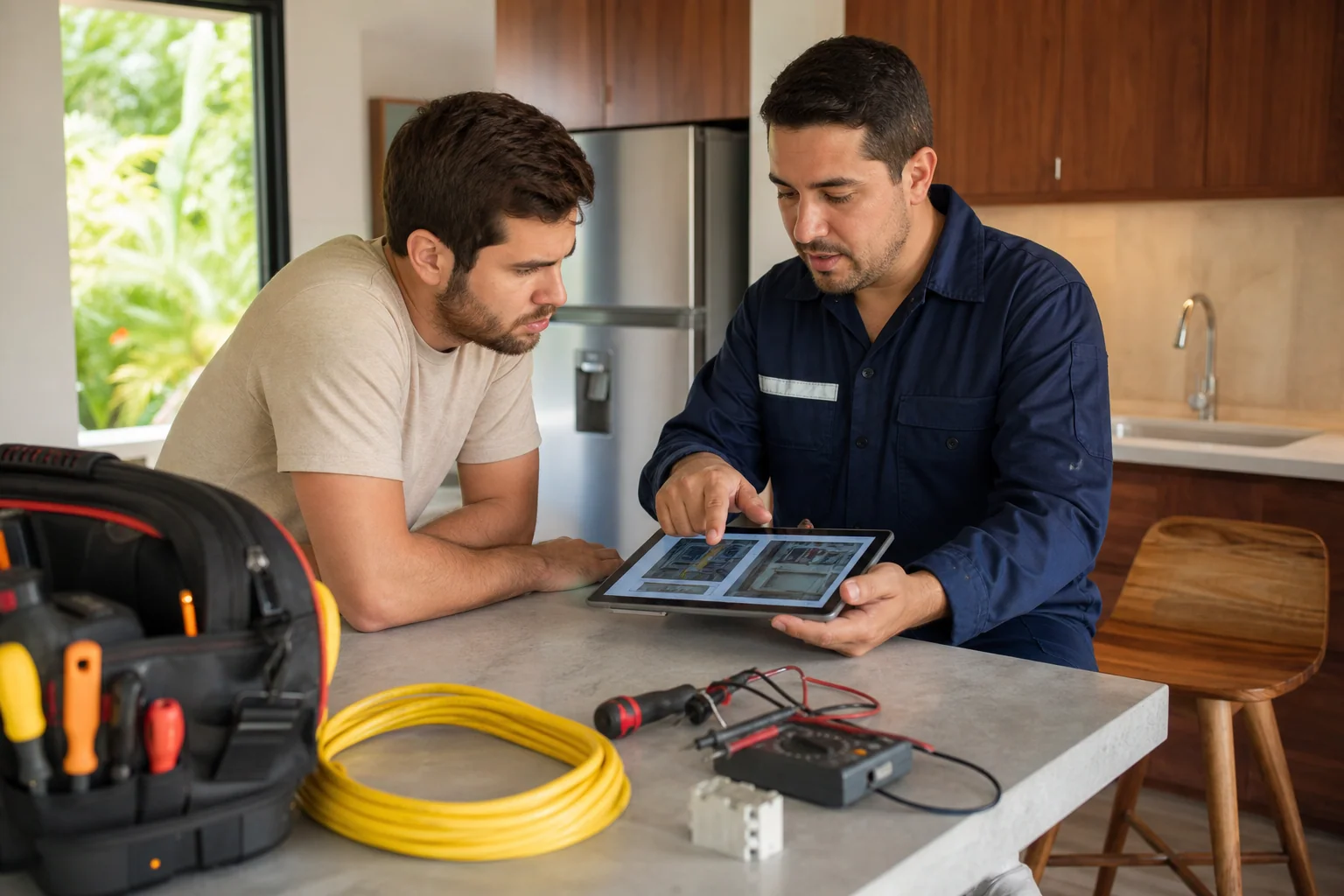
Ask for a clear report that includes photographs, the location of each finding, and an understandable explanation of priorities. Not every issue represents the same level of risk. Some conditions may need prompt correction, while others can be planned as future improvements.
How to use the findings before closing
An electrical assessment is not only about deciding whether to buy the property. Its findings can also help you:
- Request repairs before closing.
- Negotiate the price based on pending work.
- Prepare a realistic upgrade budget.
- Address priority risks before moving in.
- Plan renovations and new equipment.
- Avoid unexpected expenses after the purchase.
Any repair estimate should reflect the actual findings and characteristics of the property. An accurate price is difficult to provide without seeing the panel, accessible wiring, major loads, and site conditions.
Quick electrical checklist for homebuyers
Before signing, try to confirm:
- [ ] General condition of the panel and breakers.
- [ ] Clear circuit identification.
- [ ] Condition of accessible wiring.
- [ ] Condition and operation of receptacles and switches.
- [ ] Presence and condition of the grounding system.
- [ ] Capacity for current appliances and equipment.
- [ ] Condition of outdoor installations and wet areas.
- [ ] Apparent quality of renovations and additions.
- [ ] History of electrical faults, repairs, and maintenance.
- [ ] Review of pumps, gates, pool equipment, air conditioning, and other included systems.
A focused inspection can prevent an expensive surprise
The electrical system affects a home’s safety, function, and true cost of ownership. Reviewing it before buying helps separate minor repairs from urgent problems and upgrades that can be planned over time.
If you are considering a property in Costa Rica, Control Eléctrico CR can provide a professional electrical assessment to identify visible faults, deteriorated components, potential risks, and possible repair or upgrade needs. Clear technical information before closing can help you make a safer and better-informed purchase.
Gallery