The Risks of an Outdated Electrical System in Your Property
An aging electrical system can lead to overheating, recurring faults, damaged appliances, and electrical fires. Learn the warning signs and when to request a professional inspection.
An electrical system can continue operating for many years without being in good condition. Lights turning on and outlets supplying power do not necessarily mean that the wiring, connections, breakers, electrical panel, and grounding system are safe or suitable for today’s needs.
This is an important concern in older homes, condominiums, rental properties, and commercial spaces—especially when the electrical system has been expanded or modified without a complete assessment.
Why do electrical systems deteriorate?
Electrical components are affected by use, heat, moisture, loose connections, and age. Many older systems were also designed for much lower electrical demand.
A home that once powered basic lighting, a kitchen, and a few appliances may now have air conditioners, electric showers, computers, dryers, entertainment equipment, chargers, and smart home devices. If the original system was not designed for these loads, overheating and recurring electrical problems may develop.
In Costa Rica, humidity, water intrusion, coastal air, insects, and rodents may also accelerate deterioration in certain properties.
Main risks of an outdated electrical system
### 1. Overheated wiring
Wire insulation can become brittle, cracked, or otherwise damaged over time. Older circuits may also contain conductors that are too small for the loads now being connected.
A conductor can overheat when it carries more current than it was designed to handle. This problem is not always visible because the wiring may be concealed inside walls, ceilings, conduits, or electrical boxes.
### 2. Loose connections and electrical arcing
Connections may loosen because of repeated heating and cooling, vibration, corrosion, or poorly performed previous work. A weak connection creates additional resistance and concentrated heat.
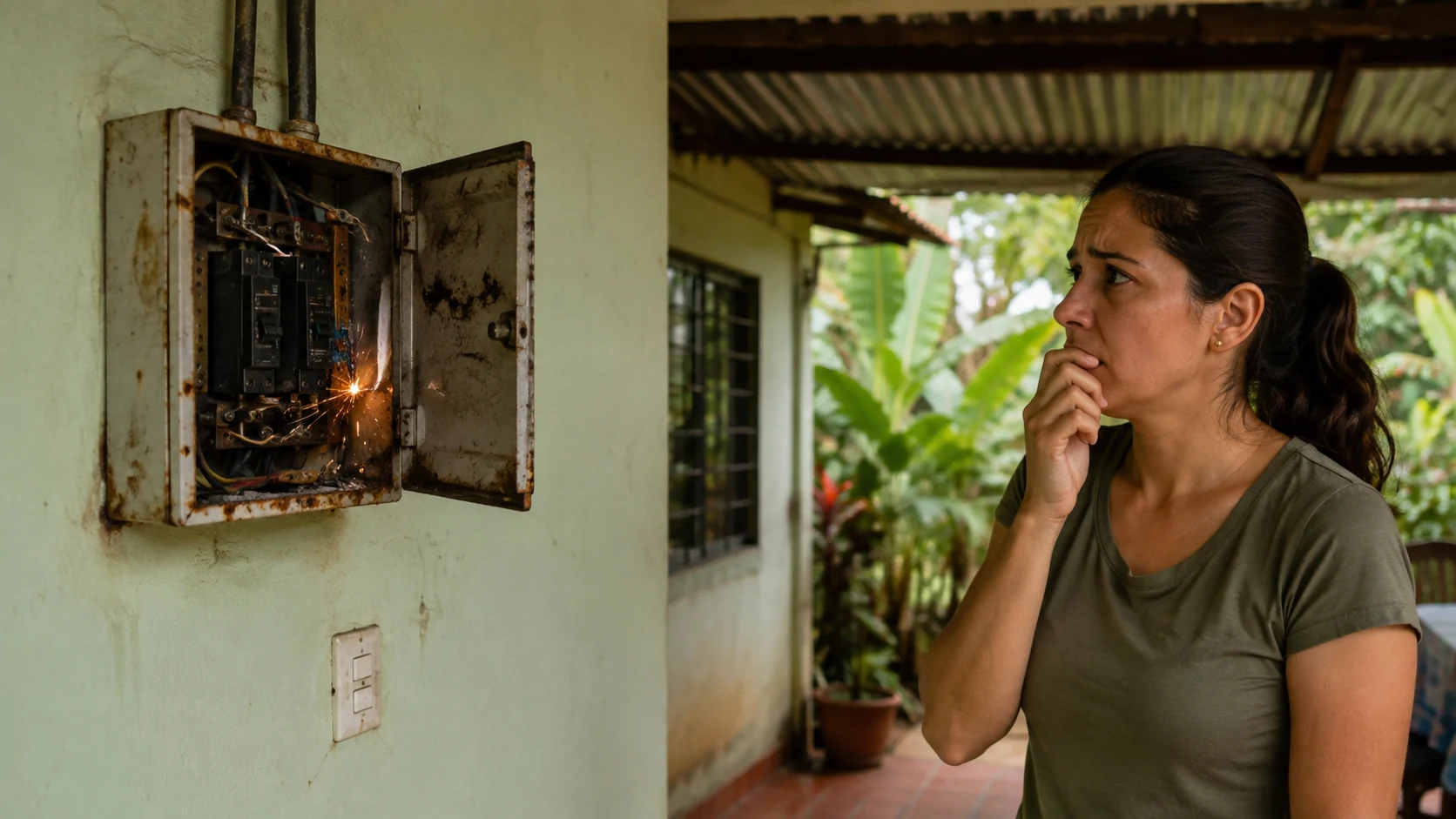
In some cases, an electrical arc may occur. Arcing can generate extremely high temperatures and damage insulation or nearby materials. Buzzing, crackling, burning odors, and dark marks around electrical devices are warning signs that require prompt attention.
### 3. Increased fire risk
Deteriorated wiring, improper splices, overloaded circuits, and incorrect protective devices can create conditions that increase the risk of an electrical fire.
A breaker that trips repeatedly should not simply be replaced with a higher-rated one before the cause is identified. Breakers are intended to protect the circuit and must be properly matched to the wiring. Installing a larger breaker without an assessment may allow conductors to overheat without the protection operating when needed.
### 4. Electric shock hazards
An outdated system may have damaged outlets, exposed conductors, uncovered boxes, or missing or inadequate grounding. These conditions increase the risk of electric shock when someone touches an appliance, metal cover, or another surface that has accidentally become energized.
Wet locations—including kitchens, bathrooms, laundry areas, garages, and outdoor spaces—deserve particular attention because of the combination of water and electricity.
### 5. Damage to appliances and electronics
Poor connections, neutral faults, voltage irregularities, and overloaded circuits may affect refrigerators, televisions, computers, air conditioners, and other sensitive equipment.
Not every appliance failure is caused by the building’s wiring. However, a professional assessment can help determine whether a power supply problem exists before an owner pays to repair or replace expensive equipment.
### 6. Breakers that may not provide proper protection
Electrical panels age as well. They may develop corrosion, overheated areas, loose connections, unprotected openings, worn breakers, or disorganized modifications.
A breaker may appear to work while still being unsuitable for the circuit. Proper protection must be evaluated alongside conductor size, connected load, panel condition, and the overall design of the installation.
### 7. Insufficient capacity for current needs
Heavy reliance on power strips, extension cords, and adapters often indicates that a property does not have enough outlets or circuits. These accessories should not become permanent substitutes for a properly designed electrical system.
Adding high-demand equipment without checking the available capacity can result in frequent breaker trips, voltage drops, and overheated wiring or connections.
Warning signs that call for an inspection
Consider requesting a professional electrical inspection if you notice one or more of the following:
- Breakers that trip repeatedly.
- Fuses that blow frequently.
- Lights that flicker or unexpectedly change brightness.
- Warm or hot outlets, switches, or cover plates.
- A smell of burning plastic or insulation.
- Buzzing, crackling, or visible sparking.
- Dark marks around outlets or electrical panels.
- Loose plugs or cracked receptacles.
- A tingling or shock sensation when touching an appliance.
- Permanent use of extension cords and multi-plug adapters.
- Visible wiring with cracked insulation.
- Corrosion, moisture, or disorganized modifications inside the panel.
- An apparently missing grounding system.
If there is smoke, a strong burning smell, persistent sparking, or an excessively hot electrical surface, stay away and seek professional assistance immediately. Do not open the electrical panel or handle energized wiring.
Does every old electrical system need complete replacement?
Not necessarily. Age is an important factor, but recommendations should be based on the system’s actual condition.
Depending on the assessment, the appropriate work may include:
- Repairing deteriorated connections.
- Replacing damaged outlets or switches.
- Correcting improper splices and overloaded circuits.
- Improving the grounding system.
- Organizing, repairing, or replacing the electrical panel.
- Adding dedicated circuits for high-demand equipment.
- Replacing specific sections of damaged wiring.
- Completing a partial or comprehensive electrical upgrade.
A targeted repair may be sufficient when the fault is clearly identified and the rest of the installation remains in suitable condition. When deterioration is widespread or the system lacks adequate capacity, a broader upgrade may be the safer and more practical solution.
What does a professional electrical assessment involve?
The scope depends on the property and the reported symptoms. It may include a visual inspection of the panel, breakers, accessible conductors, outlets, switches, connections, and grounding system.
Appropriate instruments may also be used to identify overheating, voltage loss, continuity problems, and other irregularities. Some faults are intermittent or concealed, so an effective diagnosis must consider test results as well as the history of the problem.
Preventive inspections are particularly useful for rental homes, Airbnbs, condominiums, and businesses. They can uncover deterioration before it causes an outage, disrupts occupants, or damages equipment.
Address problems before they become more serious
Delaying an assessment may allow a loose connection or damaged outlet to develop into a larger and more expensive repair. Preventive attention helps owners set priorities, distinguish necessary repairs from recommended upgrades, and plan the work according to risk and budget.
Control Eléctrico CR provides electrical diagnostics, maintenance, and repair services for residential and commercial properties. If your electrical system is old or showing warning signs, a professional assessment can help you understand its condition and make an informed decision without replacing components unnecessarily.
Conclusion
An old electrical system is not dangerous simply because of its age. Risk develops when deterioration, unplanned modifications, inadequate maintenance, or increased electrical demand exceeds the capacity and condition of its components.
Do not wait for a power outage, damaged appliance, or burning smell. A timely professional inspection can identify faults, reduce safety risks, and help prevent more extensive property damage.